Workplace & events
How to brief a customised singing-bowl workshop
A useful customised workshop begins with your audience and setting. Decide whether people mainly want to listen, learn a playing technique or combine both, then discuss a realistic format with the facilitator.

Separate the possible formats
A sound bath is mainly a listening experience. A practical workshop involves instruction and time to try the instruments. A practitioner training course is a different commitment again. Asking for “something with singing bowls” leaves these important differences unresolved.
Describe what participants should be able to do at the end. For an introduction, that might be recognising a gentle strike and trying a controlled rim movement. For an event, the purpose might simply be a thoughtfully arranged shared listening period.
Describe the people attending
Share the expected number of participants, their familiarity with bowls and the languages they use. Tell the facilitator whether this is a workplace group, a community gathering, a couple or a private celebration. Explain any known access requirements without sharing unnecessary personal information.
Ask how the facilitator handles people who prefer to observe. Hands-on participation should not be compulsory, and not everyone needs to have the same response for the workshop to be worthwhile.
Make the space part of the brief
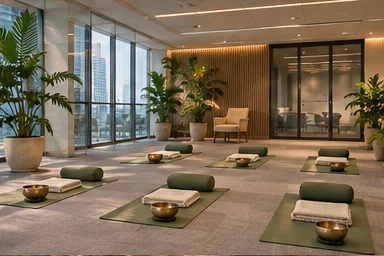
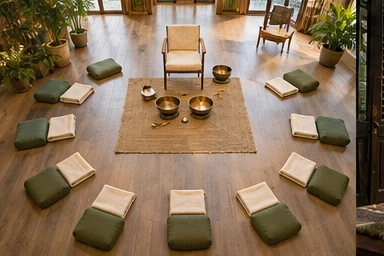
Include the venue location, seating options, noise conditions and time available for setting up. For hands-on instruction, ask how many bowls and mallets are available, whether they are shared and how supervised practice will work.
If your venue is outside the facilitator’s base area, discuss travel before finalising the budget. A customised programme may need additional preparation or equipment, so ask what changes are included and what would cost extra.
Agree on the proposal in writing
A clear proposal can state the aim, running order, group limit, equipment, venue responsibilities, fee and cancellation terms. Ask which parts can be adapted and which are fixed. This gives both organiser and facilitator a common reference.
Do not assume that attending an introductory workshop qualifies someone to facilitate sessions professionally. If certification is important to your purpose, discuss the course, assessment, issuing body and limits of the credential separately.
Can a customised workshop combine listening and learning to play?
It can be proposed, but the facilitator needs enough time, suitable instruments and a workable group size. Confirm the actual plan rather than assuming both are included.