Understanding sound
Buying your first singing bowl: a listening-led checklist
Try the actual bowl, compare it at a comfortable volume and ask about the supplied mallet and support. Appearance, size, price or a labelled note does not tell you the whole playing experience.

Begin with how you want to use it
Do you want one bowl for personal practice, an instrument for learning rim playing or equipment for supervised training? A clear purpose helps you avoid buying a large set before you know which playing techniques you enjoy.
If possible, ask a seller or teacher to demonstrate the exact bowl and then let you try it. A short demonstration by an experienced player can sound different from the result you get while learning.
Compare the bowl and mallet together
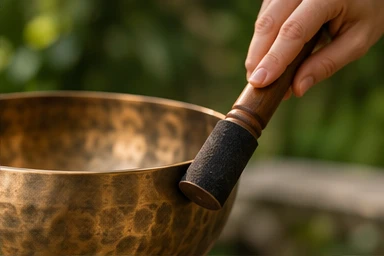
Listen to a light strike, the sustained sound and the fade. Ask which mallet was used and whether it is included. Try a controlled rim movement if that is part of your intended practice. A suitable accessory can matter as much as the instrument’s appearance.
Compare at a similar listening distance and comfortable volume. Louder is not automatically better. Recordings can help you shortlist options, but microphones, speakers and rooms alter the sound, so do not assume a video captures the whole experience.
Check the practical purchase
Ask about material, condition, care instructions, weight and the support needed beneath the bowl. If provenance or a handmade claim affects your decision, ask what evidence the seller can provide rather than inferring it from colour or surface marks.
Confirm the full price, what is included, delivery arrangements and the return or exchange policy. Inspect a physical instrument for damage before accepting it. If you are buying for a course, ask the instructor what instrument would be suitable first.
Be careful with health and frequency claims
A measured pitch can describe an aspect of sound; it does not establish that a bowl treats a particular condition. Avoid choosing an instrument mainly because it promises a medical result or claims that a specific frequency must suit everyone.
A practical beginner’s goal is simpler: an instrument you can play comfortably, at an appropriate volume, with guidance you understand. You can learn a great deal from one bowl before deciding whether another would add something useful.
Should I buy a set before attending a workshop?
Ask the organiser first. Some workshops provide instruments, while others specify what to bring. Do not assume a set is necessary.